
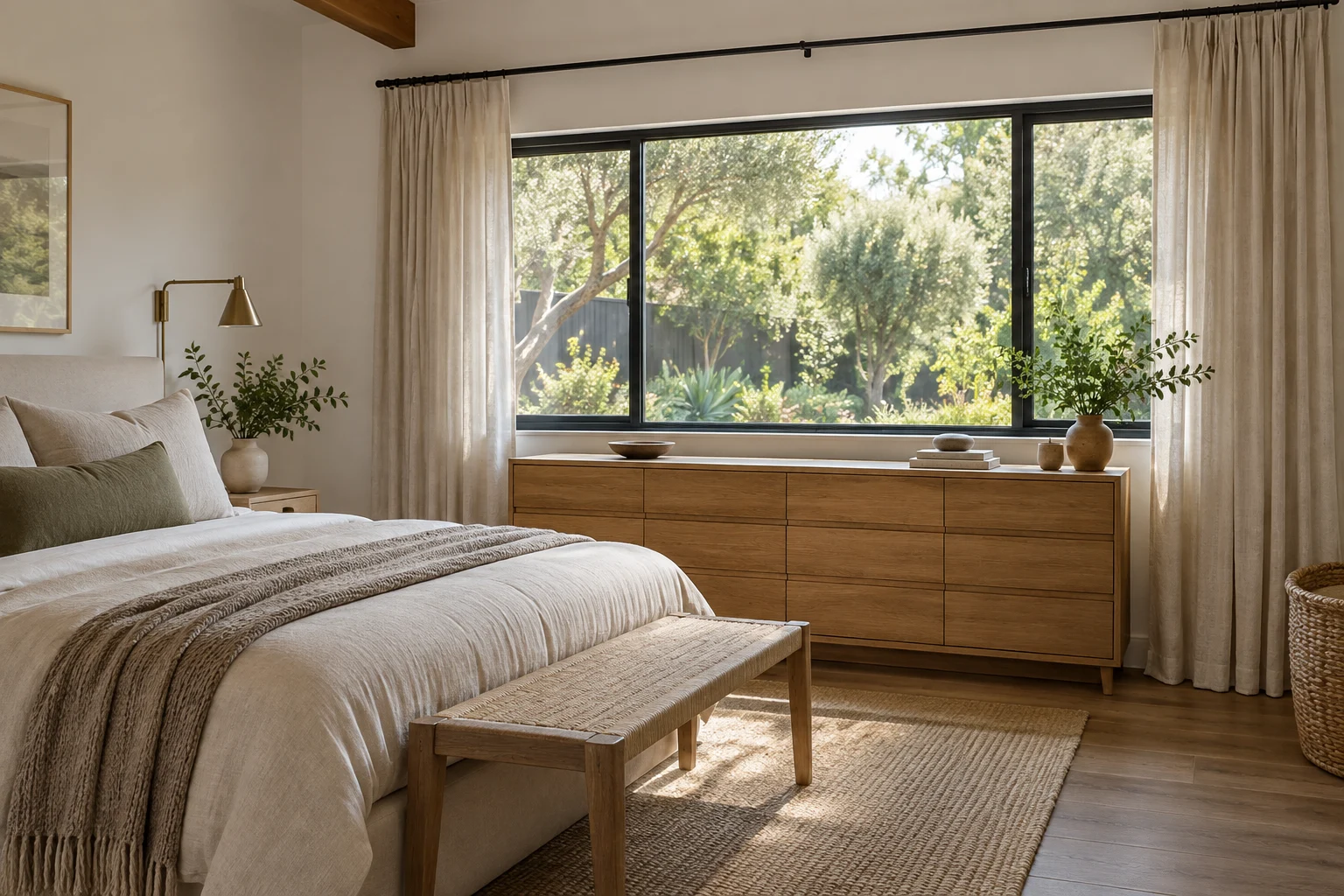
Choose a window style around ventilation, access, furniture, exterior proportions and the view. The right arrangement may combine fixed and operating windows rather than use one style throughout.
Double-hung: a familiar rhythm
Two vertically arranged sashes create a traditional proportion. Ask which sashes operate and how cleaning works for the product you are considering. It can be a useful starting point for a classic façade.
Casement: a clear, operable opening
A side-hinged sash opens outward. Check exterior clearance, handle access and screen placement. A counter in front of a window can make the operation method especially relevant.
Picture: put the view first
A fixed window emphasizes daylight and the view. It does not provide ventilation. Pairing it with an operating unit can balance a broad view with fresh air, where the opening and product allow.
Sliding and awning: consider the space
A sliding sash moves horizontally, while an awning window is hinged at the top. Think about reach, projection and exterior traffic. Discuss the appropriate use and size with the installer.
Bay and bow: a larger design decision
These assemblies project beyond the wall plane and can change the room’s character. Support, roof or head details and finishing need a specific installation plan. Review those details before focusing only on the glass arrangement.
Can you change a window style without enlarging the opening?
Sometimes a different operating style can fit the existing opening, but dimensions, ventilation needs, exterior clearance and applicable opening requirements need review. Compare the amount of visible glass and the usable opening, not just the outside frame size. Product availability and suitability are confirmed during measurement.